When Should You Move On to New Quran Verses? How to Know Your Memorization Is Stable

This article explains four practical signs of strong Quran memorization and how to know when it is time to move on to new verses. The goal is for verses to reach your long-term memory, not just stay with you for a few hours. Since similar verses often weaken memorization, also read how to deal with similar Quran verses during memorization.

Do Not Make Speed Your Only Goal

Adding new verses every day can make you feel that you are progressing, but memorizing more does not always mean that your memorization is becoming stronger.

Sometimes a person moves to a new passage too quickly and later discovers that the previous section has become difficult to recall.

Before moving on, it helps to make sure that what you have memorized is reasonably stable.

This is why strong Quran memorization matters before adding new verses.

Strong Quran memorization – students raising their hands, ready to recite
Students ready to recite. Photo: Loai.zedan234, CC BY-SA 4.0, via Wikimedia Commons

Can You Recite Without Help?

One of the simplest tests is to recite the passage without looking at the Mushaf.

If you can recite it from beginning to end without long pauses or repeated prompts, your memorization is beginning to become more stable.

If the verses feel familiar when you see them but are difficult to recall independently, you may need more repetition.

Can You Start From Different Places?

Weak memorization sometimes depends heavily on sequence. You remember the next verse only because you have just recited the previous one.

Try starting from different places within the passage.

Choose a verse from the middle and continue from there. As this becomes easier, it is a sign that your connection to the passage is becoming stronger.

What Happens the Next Day?

Another useful test is to return to the passage after a break.

Memorization may feel excellent immediately after a long session, but the real test is what remains when you come back the next day.

If you can recall most of the passage without having to relearn it from the beginning, your memorization is becoming more stable.

Pay Attention to Similar Verses

Some Quran passages contain similar verses or phrases, which can cause confusion even when the overall memorization is good.

Before moving forward, make sure you understand the differences between the places that you frequently mix up.

Do not only memorize the verse itself. Try to remember what comes before it and what follows it.

Do Not Wait for Perfection

Stable memorization does not mean that you must never make a mistake before learning anything new.

Even strong memorization needs continued review.

The goal is for the passage to be strong enough to remain with you while you add new material, not for it to become perfect on the first day.

How Quran Palace Can Help

Quran Palace helps you build strong Quran memorization and know when to move on:

Quran Palace helps you organize your memorization instead of treating every passage in the same way.

You can keep track of what you have memorized, return to sections that need more review, and connect verses to clear locations in your Mind Palace for more organized recall.

This makes the decision to move on to new memorization part of a clear system rather than simply guessing whether you have repeated enough.

Conclusion: Strong Quran Memorization Matters More Than Speed

Before moving on to new verses, ask yourself: Can I recite this passage without help? Can I start from different places? Can I still remember it after a day?

If the answer is yes in most cases, your memorization is moving in the right direction.

Do not race against the number of verses. Memorization that stays with you is more valuable than memorization that grows quickly and then fades.

Before starting a new passage, check these four signs of strong Quran memorization and track your progress with Quran Palace.


How to Build a Quran Review Schedule That Strengthens Memorization

This article explains how to build a Quran review schedule using three simple layers that protect both new and older memorization. The approach follows the principle of spaced repetition: reviewing information at increasing intervals until it sticks. To know when your memorization is ready to move on, read how to know your Quran memorization is strong.

Why Do You Need a Review Schedule?

Memorization does not become strong simply because you repeated a passage many times in one session. What you memorize today needs to be revisited regularly so that recalling it becomes easier and more stable. A clear review schedule helps you know what to review and when instead of relying only on memory or motivation.

The goal is not to fill your entire day with revision. It is to protect older memorization while you continue adding new verses.

That is why a Quran review schedule is the foundation of lasting memorization.

Quran review schedule – men reviewing the Quran together
A Quran reading circle in Ahvaz. Photo: Elph, public domain, via Wikimedia Commons

Divide Your Review Into Three Layers

You can make revision easier by dividing what you have memorized into three groups: new, recent, and older memorization.

New memorization is what you learned today or yesterday, so it usually needs more repetition. Recent memorization includes passages from the last days or weeks and needs regular review until it becomes more stable. Older memorization is stronger and can be distributed across the week so that you do not leave it untouched for too long.

This approach prevents you from treating every passage the same and lets you give each part the amount of review it actually needs.

A Simple Review Pattern

After memorizing a new passage, review it at the end of the session and again the next day. Then revisit it after a few days and eventually include it in your weekly review cycle. This is not a strict rule; it is simply a starting point that you can adjust based on your time and the strength of your memorization.

Try to keep a consistent time for review, even if it is short. Twenty focused minutes every day can be more useful than one long session followed by several days without revision.

What If Your Review Starts to Pile Up?

If older memorization begins to weaken, avoid adding large amounts of new material. Reduce the new portion temporarily and give more time to revision until your memorization feels stable again.

Start with the weakest sections, then gradually move to the stronger ones. You do not need to fix everything in a single day. Consistency matters more than temporary intensity.

How Quran Palace Can Help

Quran Palace helps you organize and follow your Quran review schedule:

Quran Palace can help you organize memorization and review instead of depending on random recall. When you can see which passages need attention and track your progress clearly, it becomes easier to build a consistent routine and return to memorized passages before they become too weak.

If you use the Mind Palace method, you can also connect memorized passages to clear locations in your mental palace and combine those locations with a regular review schedule for more organized recall.

Conclusion: A Quran Review Schedule Protects Your Memorization

Strong memorization depends not only on how much you memorize, but also on how well you review afterward. Keep recently memorized passages close, give older memorization a regular cycle, and adjust your schedule when you notice that a section is becoming weak.

The best review plan is one you can continue. A small, consistent routine is better than a large plan that quickly stops.

Start building your three-layer Quran review schedule today, and stay consistent with Quran Palace.

Why Do You Forget What You Have Memorized from the Quran? And How Can You Reduce Forgetting?

This article explains why forgetting the Quran happens and how to reduce it with clear, practical steps. Forgetting is a natural process described by the forgetting curve: information fades gradually unless we return to it. To build a system that protects your memorization, read how to build a Quran review schedule that strengthens memorization.

Why Do You Forget What You Have Memorized from the Quran?

Many people memorize new verses with enthusiasm, but after a few days or weeks, they notice that their memorization begins to weaken. This can feel discouraging and may make them think that their memory is weak or that they are unable to continue.

However, forgetting is a natural part of the memorization process, especially when there is no consistent review.

In other words, forgetting the Quran is not a sign of a weak memory.

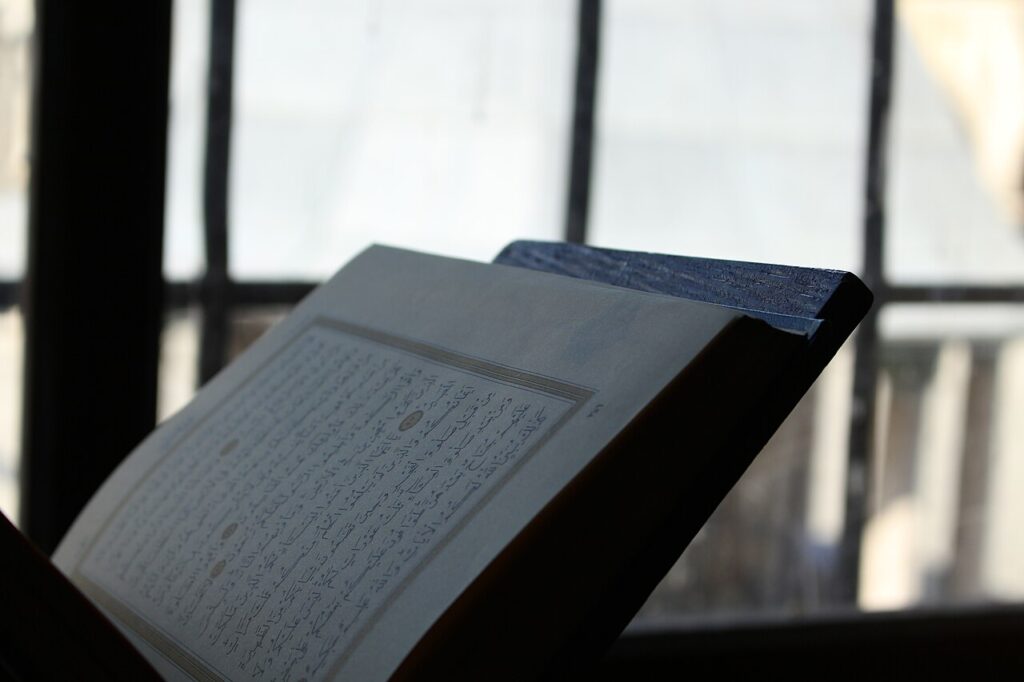
Forgetting the Quran – an open mushaf by a window
An open mushaf. Photo: Cemallamec, CC BY-SA 4.0, via Wikimedia Commons

What Causes Forgetting?

The main reason is often not weak memory, but the lack of a clear system. When you memorize new verses without reviewing them at specific intervals, your brain gradually treats them as unused information, causing the memory to weaken over time.

Similar verses can also become mixed up when memorization is done too quickly without enough review or clear connections between the verses.

How Can You Reduce Forgetting?

The best way to reduce forgetting is to make review a consistent part of your memorization process, rather than something you do only afterward.

Memorize a little and review a lot. Do not rush to memorize new verses if the previous ones are not yet firmly established. Real progress is not only about how much you memorize, but also about how well you retain it.

The Role of Quran Palace

Quran Palace helps you reduce forgetting the Quran in an organized way:

With Quran Palace, reviewing your memorization can become clearer and more organized. By connecting verses to rooms within your Mind Palace, recalling them can become more structured, helping you know what to review and track what you have already completed.

With a consistent review schedule, memorization can move from a random process to a more organized journey.

Conclusion: Forgetting the Quran Can Be Reduced With Regular Review

Forgetting does not mean you have failed. It is simply a reminder that Quran memorization requires review, patience, and a clear system.

The more consistently you review, the stronger your memorization becomes. And the more organized your journey is, the easier it becomes to continue.

Do not give up when you notice forgetting the Quran: review regularly, find your weak spots, and track your progress with Quran Palace.

How does the memory palace method help you memorize the Quran?

This article explains the memory palace method and how you can use it to organize Quran memorization and reduce forgetting. Known in memory research as the method of loci, it is one of the oldest and most effective memory techniques. To see how it becomes a practical experience, read how Quran Palace turns Quran memorization into a visual, audio, and interactive experience.

Memorizing the Quran is a great journey, but it needs a clear system that helps you stay consistent without distraction. Many learners start with enthusiasm, then later face problems such as forgetting, mixing up verses, or struggling to organize what they have memorized.

This is where the memory palace method comes in: a method that makes memorization more organized and helps the mind connect verses with clear places and images inside memory.

Memory palace method – arched corridors of the Wazir Khan Mosque
Arched corridors of the Wazir Khan Mosque, Lahore. Photo: Razaawais141, CC BY-SA 3.0, via Wikimedia Commons

What is the memory palace method?

The memory palace method is a technique based on imagining a place you know, or building one in your mind, then linking the information you want to memorize to specific locations inside it.

When memorizing the Quran, this place can be a complete palace, where each room contains a specific group of verses. When you want to review, you imagine yourself walking through this palace, moving from one room to another, and the verses come back to you in order.

Instead of being only a sequence of words, the verses become connected to an image, a place, and a clear path.

Why does this method help with memorization?

The mind deals with images and places in a very powerful way. So when you connect verses to a specific place, recalling them becomes easier than relying on repetition alone.

This does not mean that the memory palace replaces repetition, but it makes repetition clearer and more organized.

Instead of asking yourself: “Where did I stop?”
The answer becomes clearer: “I am in this room now, and this is the part connected to it.”

How does Quran Palace work?

In the Quran Palace app, memorization is not just pages and verses. It becomes a journey inside a memory palace.

You start with one room, memorize specific verses inside it, then review them until they become stable. After that, you move to a new room and add a new part of memorization.

Over time, you build a complete palace from the verses you have memorized, and each room reminds you of a part of your journey.

Benefits of the memory palace method in Quran memorization

Using this method helps you build a clearer relationship with memorization and review.

Some of the main benefits are:

– Organizing verses inside memory more easily.
– Reducing confusion between similar passages.
– Making review more enjoyable and less heavy.
– Dividing memorization into small steps instead of feeling overwhelmed by the whole path.
– Connecting progress to something visual, such as moving from one room to another.

Review is the foundation

Although the memory palace method is important, review remains the foundation of strong memorization.

It is not enough to memorize the verses once. You need to return to them regularly. The more you review at the right time, the stronger and more stable your memorization becomes.

That is why review should be based on a recurring schedule, not only on mood or free time.

Is this method suitable for everyone?

The memory palace method can be very useful for people who like imagination, images, and visual organization. However, it needs patience at the beginning until the mind becomes used to it.

You may not feel the difference from the first day, but after some time, you will notice that your memorization has become clearer inside your mind.

The important thing is not to treat it as magic or a complete shortcut, but as a tool that helps you organize your effort.

Conclusion: The Memory Palace Method Makes Quran Memorization More Organized

Memorizing the Quran is not a quick race. It is a journey that needs consistency, review, and good organization.

The memory palace method helps you turn this journey into a clear structure: room by room, verse by verse, until what you memorize becomes firmly rooted in your memory.

With the Quran Palace app, review can become a daily habit, and memorization can become a more organized experience connected to meaning and progress.

Try the memory palace method with a short surah first, and give every verse its own place in your palace with Quran Palace.