How Quran Palace Makes Quran Memorization More Organized and Interactive

Connect Each Verse to a Clear Location

Quran Memorization can become more organized and effective when you use multiple ways to help your memory recall each verse.

Quran Palace allows you to connect each verse to a specific place that you know well.

It could be a door, desk, window, or any location that is easy for you to remember.

You can also photograph that place and connect the image to the verse. This gives you a visual cue in addition to the words themselves.

With Quran Palace, Quran Memorization can be supported by connecting each verse to a specific place that you already know well.

Listen and Then Try to Recite

Inside the app, you can listen to the verses recited by a Quran reciter and then try repeating and recalling them yourself.

Listening can help reinforce the order of the words and the flow of the verses.

Now the verse is connected not only to text, but also to a place, an image, and sound.

Quran Memorization with Quran Palace

Use Hints When You Need Them

During recitation, you may get stuck on a single word even though you remember the rest of the verse.

Instead of revealing the entire verse, you can use a small hint and then try to continue from memory.

As your memorization becomes stronger, you can gradually depend less on hints.

Practice Recitation With AI

Quran Palace also lets you make review more interactive by practicing recitation with AI.

Instead of only reading or listening, you actively try to retrieve the verse from memory and recite it.

This can help you identify which parts are strong and which still need additional review.

Conclusion

Quran Palace combines several memorization tools in one experience: locations, photos, reciter audio, hints, and AI-supported recitation.

With these tools, Quran Memorization can become more structured, interactive, and easier to review over time.

The goal is not simply to repeat verses more often, but to give every verse multiple cues that can make memorization and review more structured.

Frequently Asked Questions About Quran Memorization With Quran Palace

Is Quran Palace suitable for beginners?

Yes. You can start with a short surah and link just a few verses to places you know well, such as rooms in your home or your daily route. As you get comfortable, add images, audio, and hints step by step. The goal at first is to build a clear system for Quran memorization, not to use every feature on day one.

How many verses should I add in one session?

It is better to add a small number of verses you can review well than a long passage you will forget quickly. Many learners start with three to five verses per session, then increase the amount once their review becomes stable and consistent.

Do I need to use every feature for every verse?

No. Some verses are easy to remember with just a place and a reciter’s voice. Use images and hints mainly for difficult verses, or for verses you tend to confuse with similar verses elsewhere in the Quran.

Can Quran Palace help with similar verses?

Yes. Linking each similar verse to a different place and a different image makes it much easier to tell them apart. You can also save the differing word as a hint and review these verses more often. Read more: how to deal with similar Quran verses during memorization.

How does reciting to the AI help?

Reciting to the AI lets you test yourself without looking at the mushaf. It shows where you hesitate or make mistakes, so you know exactly which verses need more review instead of repeating the whole passage without focus.

Can Quran Palace replace a teacher?

No. Quran Palace helps you organize memorization and review and track your progress, but it works best alongside a qualified teacher who corrects your recitation and tajweed. Combining both gives you organized memorization and correct recitation.

What if I stop memorizing for a few days?

Start with review before adding new verses, and use the places and images you already linked to reactivate your memory quickly. Much of what you memorized is still there and only needs to be refreshed. Read more: what to do if you stop memorizing the Quran for several days.

Do I need a lot of time every day?

No. A short, fixed time each day, even ten minutes, is enough. Consistency with a small amount is better than long sessions with gaps. You can also use short moments to review a verse or two with its images and audio. See also: how to memorize the Quran when busy.

How Quran Palace Turns Quran Memorization Into a Visual, Audio, and Interactive Experience

This guide shows how interactive Quran memorization works in Quran Palace, where every verse can be tied to a place, an image, audio, and a hint. The approach builds on the method of loci (memory palace technique). For a broader overview, read how Quran Palace makes Quran memorization more organized and interactive.

Memorization Is More Than Repetition

When people think about Quran memorization, they often think about reading a verse again and again until it becomes familiar.

But memory does not rely on repetition alone. We also remember places, images, sounds, and cues.

This is where Quran Palace takes a different approach. Instead of treating a verse as text to repeat, you can connect it to a specific place, an image, audio, a hint, and interactive recall.

That is the core idea behind interactive Quran memorization.

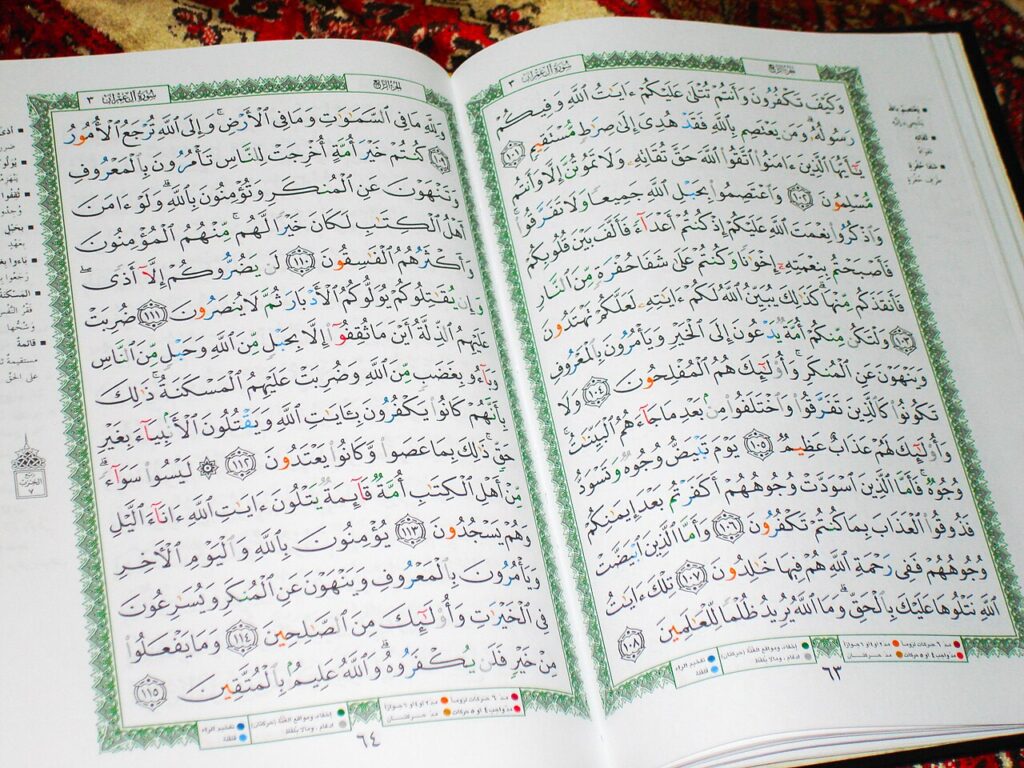
Interactive Quran memorization – color-coded Tajweed mushaf
Color-coded Tajweed mushaf. Photo: Amr Fayez, CC BY 2.5, via Wikimedia Commons

Connect Every Verse to a Specific Place

One of the core ideas behind Quran Palace is connecting verses to clear physical locations.

You can choose a real place that you know well, photograph it, and associate a verse with that location.

It might be a room, a door, a desk, a staircase, or any memorable point.

Later, when you try to recall the verse, you are not relying only on the words. You can also recall the location connected to them.

This creates a mental path that can help organize your memorization.

Use Photos as Memory Cues

A photo is not just decoration inside the app.

When you take a picture of a location and connect it to a verse, that image can become a memory cue.

Instead of asking only, “What is the next verse?” you may begin thinking, “What is the next place in my palace, and which verse belongs there?”

This gives your memorization a clearer structure.

Listen to the Verses From a Reciter

Listening can also play an important role in memorization.

With Quran Palace, you can listen to verses recited by a Quran reciter, then repeat them and try reciting them yourself.

Audio can help reinforce the order of the words and the flow of the verse.

It also gives you another learning channel in addition to reading.

Now the verse is connected not only to what you see, but also to what you hear.

Use a Hint When You Get Stuck

During recall, you may know a verse but become stuck on one word.

Instead of immediately revealing the full verse, a hint can give you only the small piece of help you need.

You can then continue from memory.

The goal is not to replace recall with a hint, but to use the hint as a small push that helps you return to the verse.

Recite With AI Support

Quran Palace also lets you use AI as part of the recitation and practice process.

Instead of making review a passive activity, you can recite what you have memorized and use AI during the session.

This makes memorization more interactive because you are not only looking at or listening to the verse. You are actively trying to produce it from memory.

That active recall is what helps reveal whether the verse is truly stable or still needs more review.

Give One Verse Multiple Memory Cues

Imagine that one verse is connected to:

  • A specific location.
  • A photo of that location.
  • The voice of a reciter.
  • A hint when needed.
  • An AI-supported recitation session.

The verse is no longer attached to only one memory cue.

You now have several possible paths that may help you reach it.

You might first remember the image, then the location, then the sound of the verse, and finally the words.

How Could One Memorization Session Work?

Here is a simple example of interactive Quran memorization in a single session:

You might begin by choosing a verse and assigning it to a clear location.

Then photograph that location inside Quran Palace.

Listen to the verse several times from the reciter and try reciting it without depending on the text.

If you get stuck, use a small hint instead of revealing everything.

Once you feel more confident, practice reciting with the AI feature.

The next day, return to the same location and try recalling the verse again.

This turns the session into a structured process rather than simple repetition.

Conclusion: Interactive Quran Memorization With Quran Palace

The idea behind Quran Palace is not only to memorize more verses. It is to give every verse multiple connections that can help you retrieve it.

The location provides structure.

The image provides a visual cue.

The reciter provides an audio cue.

Hints help when you get stuck.

AI makes the recitation process more interactive.

When these elements work together, Quran memorization can become more organized, clearer, and easier to review.

Ready to try interactive Quran memorization? Start with a single verse in Quran Palace: give it a place and an image, listen to it, and recite it until it sticks.

Are You Only Repeating Verses While Looking? How to Test Your Quran Memorization More Effectively

This guide covers seven practical ways to test your Quran memorization instead of only rereading verses while looking. The idea is backed by research on the testing effect: recalling information strengthens memory more than reading it again. To learn how to link verses to places, images, and sounds, read how Quran Palace turns Quran memorization into a visual, audio, and interactive experience.

Repeated Reading Does Not Always Mean a Verse Is Memorized

While memorizing the Quran, you may read a verse from the Mushaf many times until it feels very familiar.

However, once you close the Mushaf and try to recite it, you may discover that recalling it is much harder.

Recognizing words when you see them is different from retrieving them from memory.

That is why your memorization session should not consist only of reading and repeating while looking at the text.

In other words, the real way to test your Quran memorization starts when you close the mushaf.

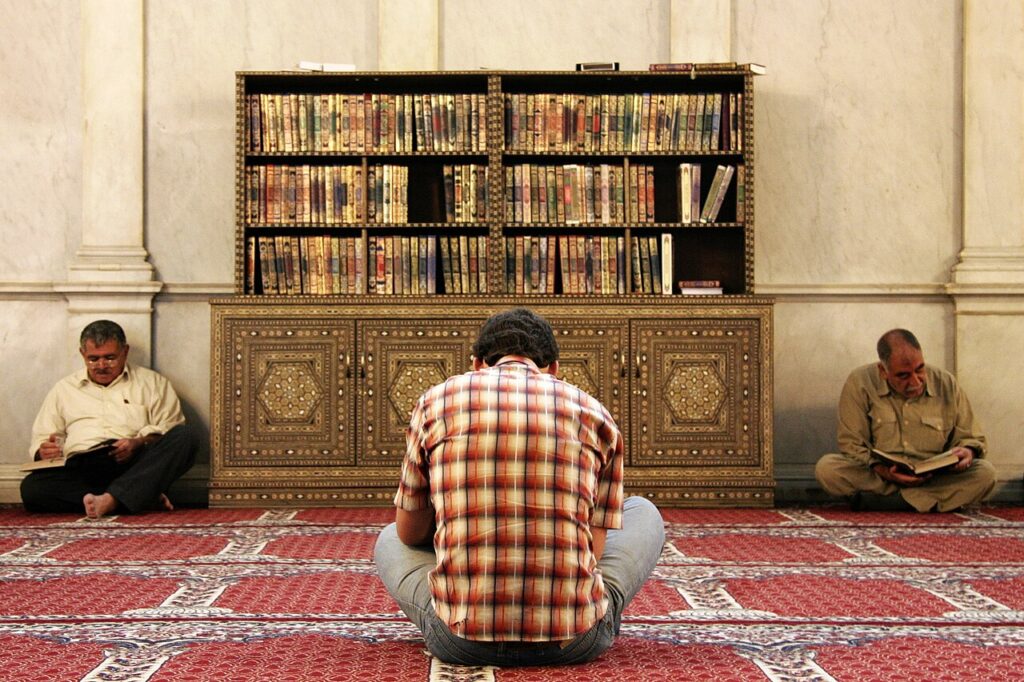
Test your Quran memorization – men reading the Quran in the Umayyad Mosque
Reading the Quran in the Umayyad Mosque, Damascus. Photo: Dreirik, CC0, via Wikimedia Commons

Close the Mushaf and Try to Recall

After reading and repeating a verse several times, close the Mushaf or look away and try to recite it from memory.

If you stop, give yourself a few moments to remember before checking the text.

Then look at the verse, identify the mistake, and try again.

This trains your mind not only to recognize the correct words, but also to retrieve them independently.

Do Not Wait Until the Entire Passage Is Memorized

You can start testing yourself from the first verse.

Memorize a small section and immediately try recalling it.

Then add the next section and connect them together.

Testing yourself while building the passage makes it easier to discover weak points before they accumulate.

Test the Beginning, Middle, and End

Sometimes you can recite a whole passage because each verse naturally leads you to the next.

But if someone asks you to begin from the middle, you may struggle.

Do not always test yourself from the beginning.

Choose a verse from the middle and start there. Then try another location.

This helps you determine whether you truly know the passage or are simply relying on sequence.

Use the Smallest Possible Hint

If you forget a word, avoid immediately looking at the entire verse.

Try using a small hint, such as the first word, and then complete the rest yourself.

The goal is to give your memory only the amount of help it needs to get back on track.

Over time, try reducing how often you need these hints.

Return to the Passage Later

Being able to recite immediately after memorizing is useful, but it is not the only test.

Return to the passage a few hours later and again the next day.

If you can recall it without learning it again from the beginning, that is a stronger sign that your memorization is becoming stable.

If much of it has faded, it does not mean the session was wasted. It simply means the passage needs another cycle of review and recall.

Track Repeated Mistakes

When testing yourself, notice where you repeatedly stop.

It may be a specific word, the beginning of a verse, or the transition between two verses.

Instead of reviewing the whole page equally, give these weak points additional attention.

Repeated mistakes tell you exactly where your memorization needs more work.

How Quran Palace Can Help

Quran Palace makes it easy to test your Quran memorization in every session:

Quran Palace can help make memorization and recall more organized.

By connecting passages to clear locations inside your Mind Palace, you create a structured path that can support recall.

Tracking passages that need additional review also helps you return to weak areas instead of repeatedly reviewing only what is already easy.

The goal is not simply to read the Quran more often, but to strengthen your ability to retrieve what you have memorized when you need it.

Conclusion: Test Your Quran Memorization, Don’t Just Reread

Do not measure the strength of your memorization only by how many times you have read a verse.

Test yourself without looking at the Mushaf, begin from different places, and return to the passage later.

The more you practice recalling verses independently, the easier it becomes to identify what is truly stable and what still needs review.

Make it a daily habit to test your Quran memorization: close the mushaf, recall, and correct your mistakes with Quran Palace.

What Should You Do If You Stop Memorizing the Quran for Several Days?

This article explains how to resume Quran memorization after missing several days, without pressure or starting over. Some forgetting after a break is normal, as described by the forgetting curve, and focused review brings memorized verses back quickly. To check what is still solid after your break, read how to test your Quran memorization more effectively.

A Break Does Not Mean Starting From Zero

There may be days when work, study, travel, or other responsibilities interrupt your Quran memorization routine.

When you return, some passages may feel weaker, and you might think that you have lost everything you memorized.

In most cases, you are not starting from zero. The information is still in your memory, but it may need to be activated again.

The most important thing is to return calmly and systematically instead of trying to recover everything in one day.

That calm, organized approach is the key to resume Quran memorization successfully.

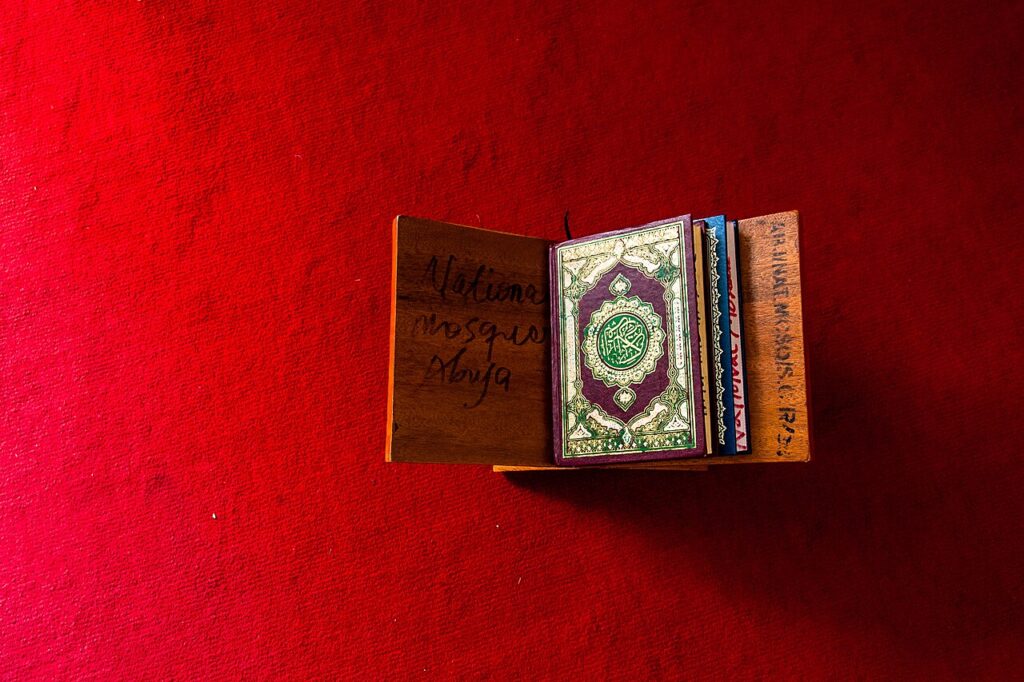
Resume Quran memorization – the Quran on a wooden rehal stand
The Quran on a rehal at the Abuja National Mosque. Photo: Mark Fischer, CC BY-SA 2.0, via Wikimedia Commons

Review Before Adding New Memorization

After a break, do not make new verses your first priority.

Start by reviewing the last passages you memorized before stopping.

Read the passage, then try reciting it without looking at the Mushaf. This quickly shows you which sections are still strong and which ones need more attention.

Once your previous memorization feels more stable, gradually begin adding new verses again.

Do Not Review Everything at Once

If you have memorized a large amount, reviewing everything in one session may feel overwhelming.

Divide your review into smaller sections.

You can work on one weak passage today and another tomorrow while still briefly reviewing stronger sections.

This helps you rebuild your memorization gradually without making the task feel too large.

Identify Your Weakest Sections

After a break, some passages will be easier to recall than others.

Do not spend the same amount of time on every section.

Pay attention to verses where you frequently stop, hesitate, or need to look at the Mushaf.

Give these passages more review time.

Effective review does not mean repeating everything equally. It means giving more attention to the areas that need it most.

Temporarily Reduce New Memorization

If you used to memorize ten verses a day, you do not need to return immediately to the same amount.

Start smaller.

For the first few days, your goal may simply be to strengthen older memorization while adding only one or two new verses.

As your previous memorization becomes stable again, gradually increase the amount.

Do Not Try to Make Up for Every Missed Day

A common mistake is thinking, “I missed five days, so today I need to memorize five days’ worth.”

This can quickly make the session exhausting and may lead to another break.

Instead, return to your normal rhythm.

Continuing from today is more important than trying to repair every missed day at once.

Create a Simple Three-Day Return Plan

You can make returning easier with a simple approach:

Day 1: Review only.

Day 2: Review plus a very small amount of new memorization.

Day 3: Gradually return to your normal routine if the older memorization feels stable.

This is not a strict rule, but it can help you avoid returning too aggressively.

How Quran Palace Can Help

Quran Palace makes it easier to resume Quran memorization in an organized way:

Quran Palace can help you see where you stopped and which passages need review instead of relying only on memory.

If your memorization is connected to locations inside your Mind Palace, you can return to those locations and review the associated passages in a more organized way.

A clear system makes returning after a break easier because you do not have to rebuild your plan from the beginning.

Conclusion: Resume Quran Memorization Through Review

If you stop memorizing the Quran for several days, do not try to recover everything immediately.

Begin with review, identify your weakest passages, reduce new memorization temporarily, and gradually return to your routine.

Success in Quran memorization does not mean never taking a break. It also means knowing how to return when a break happens.

However long the break, take one small step today to resume Quran memorization: review a little, then continue with Quran Palace.

How to Continue Memorizing the Quran When You Have Little Time

This article shares six practical tips to help you memorize the Quran when busy, without stopping or feeling overwhelmed. Consistency with a small amount matters more than waiting for a long free block, a core idea in time management. If you have already missed a few days, read what to do if you stop memorizing the Quran for several days.

Do Not Wait for the Perfect Day

One of the reasons people stop memorizing the Quran is that they wait for the right amount of free time.

You may tell yourself that you will memorize when your schedule becomes calmer or when you can dedicate a full hour to it.

But busy days will always happen. A better approach is to create a memorization routine that still works when your time is limited.

A small routine that continues is more useful than a long session followed by several days of stopping.

That is the secret to memorize the Quran when busy: consistency over perfection.

Memorize the Quran when busy – a woman reading the Quran in a mosque in Shiraz
Reading the Quran under stained-glass windows in a mosque in Shiraz. Photo: Taisir85, CC BY-SA 4.0, via Wikimedia Commons

Choose a Small Amount You Can Maintain

You do not need to memorize an entire page every day.

One verse or a few lines may be enough depending on your available time.

The important thing is to choose a realistic amount. If you normally have twenty minutes available, build your routine around those twenty minutes instead of planning for an hour that may rarely appear.

You can always increase your memorization when you have more time.

Make Review a Priority

When time is limited, you may feel that every minute should be used for new memorization.

However, ignoring review can create more work later when older passages begin to weaken.

On busy days, reduce the amount of new memorization if necessary, but keep a short review session.

This helps you continue progressing without losing what you have already built.

Use Short Sessions

A useful memorization session does not always need to be long.

Ten focused minutes can be enough to review several verses or test yourself on a difficult passage.

Several short sessions may sometimes be easier than waiting for one uninterrupted hour.

Knowing exactly what you plan to review before the session starts also helps you use your limited time effectively.

Do Not Try to Catch Up All at Once

If you miss one or two days, avoid trying to memorize a very large amount the next day.

Simply return to your normal routine.

Review what needs attention and continue with your usual amount.

The goal is to build a long-term habit, not to maintain a perfect schedule that never changes.

Connect Memorization to a Fixed Time

It can help to connect Quran memorization to an activity that already exists in your daily routine.

This might be after a specific prayer, early in the morning, or before sleep.

When memorization has a clear place in your day, you spend less energy deciding when you should do it.

How Quran Palace Can Help

Quran Palace helps you memorize the Quran when busy with short, organized sessions:

Quran Palace can help you organize your memorization and review when your time is limited.

Instead of beginning every session by trying to remember what needs attention, you can track your progress and return directly to passages that need review.

You can also use the Mind Palace method to connect passages to clear mental locations, making recall more organized during short sessions.

Conclusion: You Can Memorize the Quran When Busy

Having limited time does not mean you need to stop memorizing the Quran.

Choose a small amount, protect your review, and make use of short sessions.

Do not search for the perfect routine. Build one that you can actually maintain.

Twenty consistent minutes every day can take you much further than occasional long sessions.

Start with one small step today and make it a habit to memorize the Quran when busy with Quran Palace.

How to Deal With Similar Quran Verses During Memorization

This article covers five practical ways to handle similar Quran verses so they stop getting mixed up during memorization and recitation. Psychologists explain this confusion through interference theory: similar information competes in memory. To check how solid your memorization is, read how to test your Quran memorization more effectively.

Why Do Similar Verses Get Mixed Up?

While memorizing the Quran, you may come across verses or phrases that are very close in wording or sentence structure. You may know the verse well, but during recitation you suddenly move to a similar passage from another place or stop because you cannot remember which wording belongs here.

This is normal because the mind naturally connects similar information. The problem is not similarity itself, but memorizing similar passages without clearly noticing their differences.

That is why similar Quran verses need a specific approach to memorization and review.

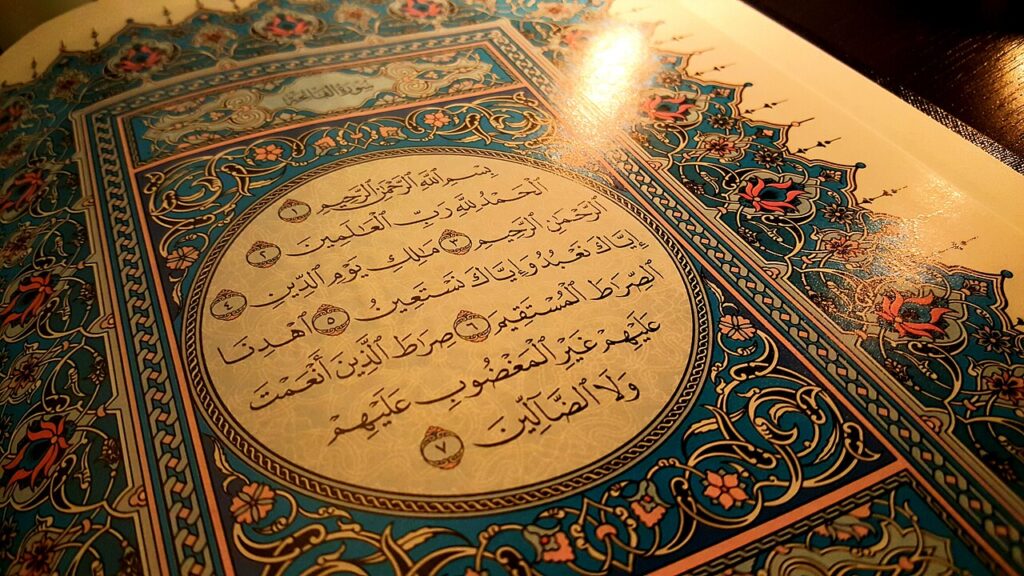
Similar Quran verses – close-up of an ornate mushaf page
Surat al-Fatihah in an ornate mushaf. Photo: Free Pictures 4K from Egypt, CC BY 2.0, via Wikimedia Commons

Do Not Rely Only on Repetition

When you make a mistake in a similar verse, your first reaction may be to repeat it many times.

Repetition helps, but it does not always solve the problem if you do not understand why you are confusing the passages.

Place the two similar verses next to each other and compare them.

Ask yourself:

Which word is different?

Is the sentence order different?

What comes before each passage?

What comes after it?

The clearer these differences become, the less likely you are to move to the wrong passage.

Focus on the Difference Word

In many cases, the difference between two similar verses is only one word or a short phrase.

Turn that word into a mental marker.

Instead of relearning both verses completely, focus on the point where the wording changes. When you reach that moment during recitation, the difference will help guide you to the correct version.

Connect the Verse to Its Context

One reason similar verses become confusing is that we memorize them in isolation.

Try reviewing the similar verse together with two or three verses around it. This gives your mind a stronger context and helps it know which wording belongs in that location.

Do not only memorize, “What is the verse?”

Also memorize, “Where is this verse, and what comes before and after it?”

Test Yourself From the Middle

If you always start from the beginning of a page or surah, your memorization may become too dependent on sequence.

Choose a similar verse and try starting directly from it.

If you can recall it without needing to recite everything before it, your connection to that verse is becoming stronger.

Track the Places Where You Make Mistakes

Some passages need more attention than others.

Instead of reviewing everything equally, keep a short list of the similar verses that you regularly confuse.

Give those passages extra review and test yourself on them again after a few days.

You may notice that repeated mistakes begin to disappear when you work on them separately.

How Quran Palace Can Help

Quran Palace helps you distinguish and strengthen similar Quran verses:

Quran Palace can help you organize your memorization and connect verses to clear locations inside your Mind Palace.

Giving different passages separate mental locations may help you distinguish similar verses instead of allowing them to blend together in memory.

Regularly returning to passages that need more review can also strengthen these differences over time.

Conclusion: Similar Quran Verses Need Distinction, Not Just Repetition

Similar verses do not only need more repetition. They need more attention to detail.

Compare the passages, focus on the different words, connect each verse to its context, and test yourself from different starting points.

With organized review, the places that once caused confusion can become clear markers that help you recall the Quran with greater confidence.

Start by listing the similar Quran verses you tend to confuse, and review them with focus in Quran Palace until they stick.